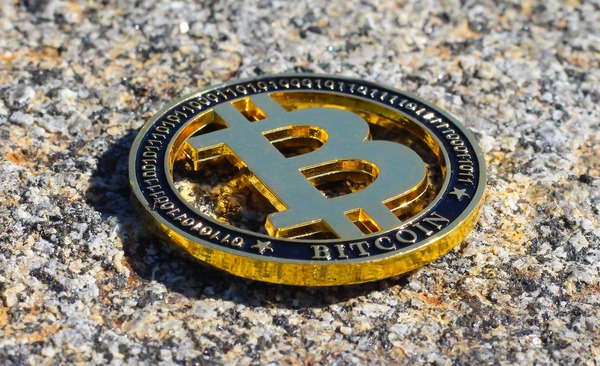
Bitcoin definition in simple terms
Bitcoin is digital money that exists as entries on a public ledger rather than as physical cash. People can send it, receive it, and hold it using software or hardware that manages cryptographic keys.
A useful beginner distinction is that Bitcoin can refer to both the network and the asset. The network processes and records transactions. The asset is the unit of value people send and receive on that network. BTC is the abbreviation commonly used for that asset, similar to how USD refers to US dollars.
Bitcoin vs BTC vs blockchain
These terms are related, but they are not the same thing.
| Term | What it means |
|---|
| Bitcoin | The overall system: the network and the digital currency |
| BTC | The ticker symbol and unit of bitcoin |
| Blockchain | The public ledger that records Bitcoin transactions |
This matters because people often use the words interchangeably. In practice, someone might say they "bought Bitcoin," "sent BTC," or "checked the blockchain," but each phrase points to a different part of the same system.
Who created Bitcoin?
Bitcoin was introduced in 2008 in a white paper published under the name Satoshi Nakamoto. In 2009, the software went live and the Bitcoin network began operating.
Satoshi described Bitcoin as a peer-to-peer electronic cash system. The goal was to make online value transfer possible without depending entirely on a trusted third party to maintain the ledger. Satoshi Nakamoto's real identity remains unknown.
Why was Bitcoin created?
Bitcoin was created to solve a basic digital money problem: how to send value over the internet without needing one central party to approve and record every transfer.
Before Bitcoin, digital payments usually depended on banks, card networks, or payment companies to prevent double spending and keep account records. Bitcoin approached that differently. It combined cryptography, a distributed network, and a public transaction history so participants could agree on which transactions were valid without a single operator controlling the system.
That design does not remove every trade-off, but it does make Bitcoin different from ordinary online payment systems. Its rules are enforced by software and network participants rather than by one institution's internal database.
How does Bitcoin work?
At a high level, Bitcoin works as a shared ledger system. When a user creates a transaction, it is broadcast to the network. Nodes relay that transaction and check whether it follows the protocol rules, such as using valid signatures and not spending the same funds twice.
If the transaction is valid, it waits to be included in a block. Miners compete to create the next valid block through proof-of-work, which is the process Bitcoin uses to secure the chain and order transactions. When a miner adds a block accepted by the network, the included transactions become confirmed and part of the blockchain.
Wallets are part of this process, but a wallet does not literally store coins inside the app or device. Instead, it stores or manages the private keys that control access to BTC recorded on the blockchain. A receiving address is the destination someone uses to send bitcoin, while the private key proves control over the funds associated with that address.
If you want to go deeper into storage and access, a separate guide to bitcoin wallets is the better place for that topic.

What is a Bitcoin transaction?
A Bitcoin transaction is a signed instruction that moves BTC from one address to another. After it is created, it is broadcast to the network and checked by nodes. If it passes validation, it sits in a waiting area often called the mempool until a miner includes it in a block.
For a beginner, the practical point is that sending bitcoin is not exactly like sending an email or using a bank app. The network must verify the transaction, and the transaction must be included in the blockchain before it is considered confirmed.
Bitcoin transactions also usually involve a network fee, sometimes called a miner fee. That fee helps determine how attractive the transaction is for inclusion when the network is busy.
What is a Bitcoin confirmation?
A confirmation means a transaction has been included in a block on the blockchain. Once that happens, it has one confirmation. As more blocks are added after it, the number of confirmations increases.
More confirmations generally increase confidence that the transaction is settled and difficult to reverse. This is why some services or users wait for more than one confirmation before treating a payment as final. The exact number can vary by platform, amount, or risk tolerance.
Transaction timing is not always the same. A payment can confirm faster or slower depending on network congestion, the fee attached to the transaction, and whether miners prioritize other pending transactions first. An unconfirmed transaction is not necessarily failed; it may simply still be waiting in the mempool.
Can Bitcoin transactions be reversed?
Confirmed Bitcoin transactions are generally difficult to reverse. That is one of the reasons users are told to check the destination address carefully before sending.
In practical terms, if bitcoin is sent to the wrong address, recovery may be impossible unless the recipient voluntarily sends it back. This is very different from some traditional payment systems, where reversals or chargebacks may exist under certain conditions.
Is Bitcoin anonymous?
Bitcoin is not fully anonymous. It is more accurate to describe it as pseudonymous.
Bitcoin addresses are not the same as verified real-world names, but transaction activity is visible on the public blockchain. That means payments can be traced between addresses, and in some situations those addresses can be linked to real identities through exchanges, service providers, or other data sources. For beginners, the key takeaway is simple: Bitcoin offers transparency on the ledger, not guaranteed anonymity.

What is Bitcoin mining?
Bitcoin mining is the process that adds new blocks to the blockchain and helps secure the network. Miners use computing power to compete in Bitcoin's proof-of-work system. The miner that produces a valid block accepted by the network can receive the block reward and the transaction fees included in that block.
Mining serves two functions at once. It helps decide transaction inclusion and ordering, and it is also how new BTC issuance enters circulation. This is why mining is central to both Bitcoin's security model and its supply schedule.
How many bitcoins are there?
Bitcoin's total supply is capped at 21 million coins. That supply cap is built into the protocol, which is a major part of why Bitcoin is often described as scarce.
Not all 21 million BTC exist yet. New bitcoin is issued through mining according to a schedule that decreases over time. The amount of new BTC miners receive is reduced roughly every four years in an event called the halving. A halving lowers the rate of new issuance, which means bitcoin enters circulation more slowly than before.
Eventually, the creation of new BTC is expected to approach zero as the supply cap is reached. At that stage, miners would no longer rely on newly issued coins in the same way and would instead be compensated mainly through transaction fees, assuming the network continues operating under its current model.
Why does Bitcoin have value?
Bitcoin is not backed by a physical commodity in the way beginners sometimes imagine. Its value comes from a combination of scarcity, utility, market demand, and trust in the network's rules.
Scarcity matters because supply is limited. Utility matters because BTC can be transferred globally on a decentralized network. Market demand matters because people are willing to buy, hold, use, or accept it. Confidence in the system matters because participants can inspect the rules, verify transactions, and rely on a public ledger rather than a closed internal database.
Its market price can still change sharply. If you want to understand that side of the topic, the separate bitcoin price page is more relevant than this beginner guide.
Practical beginner checklist before using Bitcoin
Before using Bitcoin for the first time, it helps to keep a few basic points in mind:
- Learn the difference between Bitcoin, BTC, and the blockchain
- Understand that wallets manage keys, not literal coins
- Double-check the receiving address before sending
- Expect transaction confirmation times to vary
- Remember that fees can change with network demand
- Back up your wallet or recovery phrase securely
- Know that blockchain activity is public
- Treat confirmed transactions as difficult to reverse
- Be cautious of scams, phishing, and fake support messages
These basics do not cover everything, but they reduce common beginner mistakes.